

Best Non Repainting Forex Indicator
Contents
- What are repainting indicators?
- Repainting the latest candle
- Repainting past candles
- Do all indicators repaint?
- Why exercise indicators repaint?
- Repainting in multi-timeframe (MTF) indicators
- How to know if the indicator is repainting?
- How to tell if an indicator is repainting if I cannot backtest it?
- Is an indicator that repaints useless?
- Examples of proficient repainting indicators
- ZigZag
- Fractals
- Semafor
- Center of Gravity
- How to fix indicator repainting?
- Other platforms
- cTrader
- NinjaTrader
- TradingView
- Conclusion
Using technical indicators is very popular amongst Forex traders. Lots of them apply custom indicators with platforms like MetaTrader, cTrader, NinjaTrader, and TradingView. Sooner or later, a new trader either encounters a mention of indicator repainting or stumbles upon such an indicator itself. And so, what is a repainting indicator? If you wonder what a repainting indicator is, then this tutorial is for you.
The concept of repainting and non-repainting indicator often confuses traders, peculiarly new ones. However, at that place is nothing difficult in these concepts and it is also very important for traders to understand what repainting indicator is and how to recognize one because there are many scams involving the sale of repainting Forex indicators online.
What are repainting indicators?
Repainting ways that the indicator is updating its display, changing what has already been on the chart. There are two major types of repainting:
Repainting the latest candle
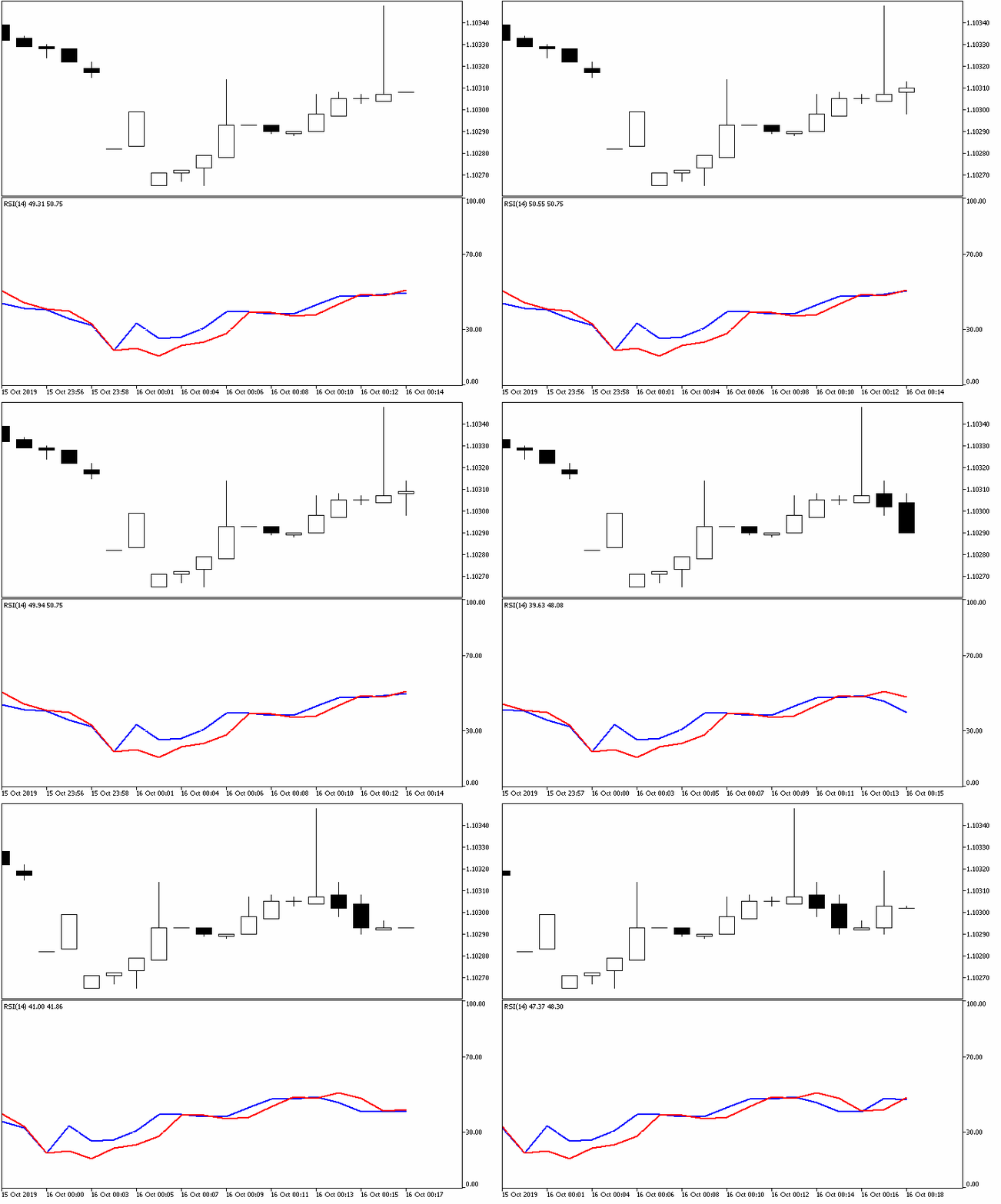
Nearly all technical indicators constantly update the electric current candle value with each new tick. Information technology is a totally normal behavior. The Close toll of the current candle changes for as long as the candle is forming, so if the indicator is based on Close prices (which is oft a default applied price type), the indicator'south value at the current bar will change also. This isn't bad and many traders wouldn't even call this repainting. To mitigate the results of such repainting, traders should look for the candle to shut and a new one to open before taking any consideration of the indicator'south value. However, if you lot set up the indicator price type to Open, this ceases to be a trouble at all. For example, meet the latest candle repainting with these two classic RSI indicators — the reddish one is applied to Open, then its value never changes after it has been calculated for the given candle; the blue ane is applied to Shut and is updating with each new tick:
Repainting past candles
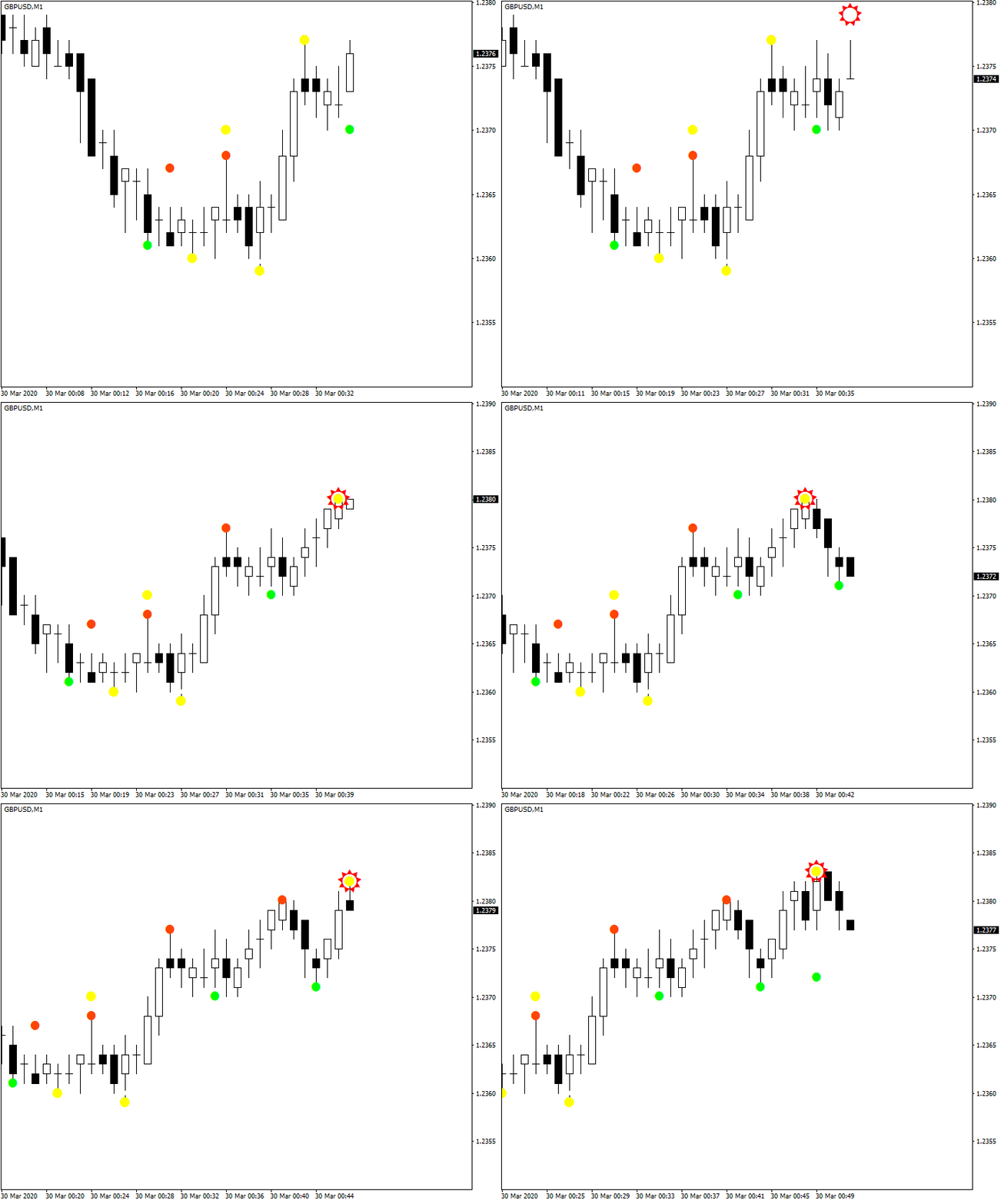
Some indicators are changing their signals on past candles. Information technology means that the indicator'southward code is looking at the time to come candles to paint the display for the past bars. Of course, a trader cannot rely on such an indicator in live trading equally it won't exist seeing future candles when fastened to a chart. This is a bad kind of repainting. For example, you can run across how a famous repainting indicator Semafor keeps repainting the signals on old candles. If yous would accept acted on any of them, you would become yourself in problem:
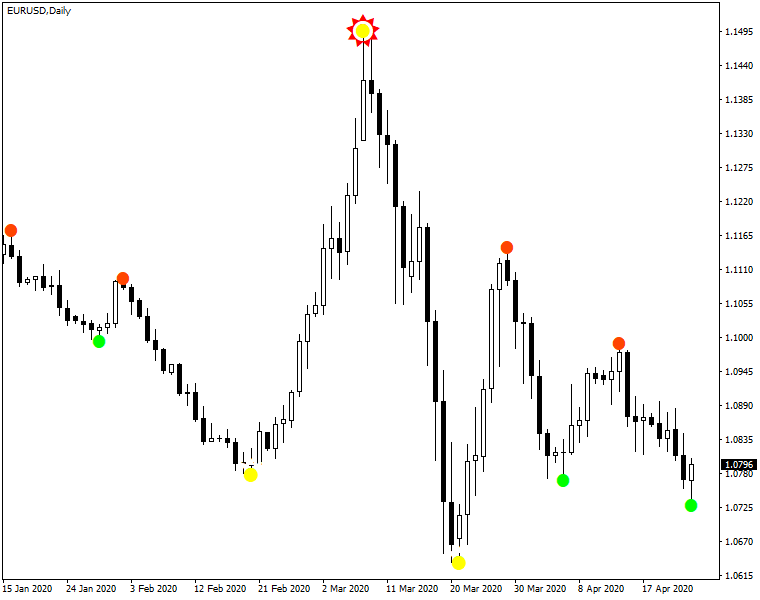
If y'all look at the aforementioned indicator'due south output in retrospect, it looks perfectly precise and impeccably timed:
Practise all indicators repaint?
Of form, non all indicators are repainting. In fact, the majority of the technical indicators people use in FX trading are non-repainting. A normal (non-repainting) indicator doesn't change its signal value for the candle after that candle has closed. Non-repainting indicators never look into the future to give a signal for the electric current candle — they are calculated purely using the electric current or past candles. Such indicator volition never alter its value on ane of the past candles should some new data arrive.
Why exercise indicators repaint?
Repainting of the by candles when added intentionally by the indicator developer is normally aimed at fooling potential users to make the signals appear more than accurate or timely. What appears as perfect signals on a historical chart will actually turn out to exist nowhere nigh as adept in live trading. The historical chart was showing the indicator with all its signals already repainted using the chart data that hadn't been available at the time of those signals.
In brusque, a repainting indicator can exist fabricated to look much more highly-seasoned than a not-repainting indicator — its historical entry and be signals very precise and perfectly timed.
Sometimes, an indicator tin can be fabricated repainting intentionally but without whatever malicious intent. This can be useful to make further chart analysis easier or to highlight some peculiarities of the price action. In any example, the developer should conspicuously disclose the repainting nature of the indicator. Otherwise, it is generally considered cheating or fifty-fifty scamming by the community of Forex traders.
Occasionally, an indicator can exist made repainting completely unintentionally. It is possible to code an indicator in such a fashion that it "looks" at the next bar (to the correct) instead of previous bars to calculate its indicate value. This error can be committed by a beginner developer without giving information technology a 2d thought. That is why it is important for indicator coders to test and backtest their piece of work before releasing information technology to the public to avoid being defendant in repainting scam.
Lastly, indicators that repaint the electric current bar based on Close/High/Depression price (like the blue RSI in the instance higher up) are coded that way intentionally, and the concluding candle repainting is a normal behavior for them. If you lot apply such indicator in trading, you should have a cue only from the finished candles.
Repainting in multi-timeframe (MTF) indicators
An often-overlooked kind of repainting issue is the one that occurs in multi-timeframe (MTF) indicators. An MTF indicator is an indicator that uses information from other timeframes (normally, higher ones). For example, a elementary multi-timeframe moving average indicator could be displaying an SMA value from a daily timeframe on your H1 chart.
Some MTF indicators tin can look very appealing thanks in large to their repainting effect. When an MTF indicator is attached to a nautical chart of a lower timeframe, its historical values are displayed then equally if the Open up/High/Depression/Close values of the higher timeframe candle are known at the outset candle of the lower timeframe.
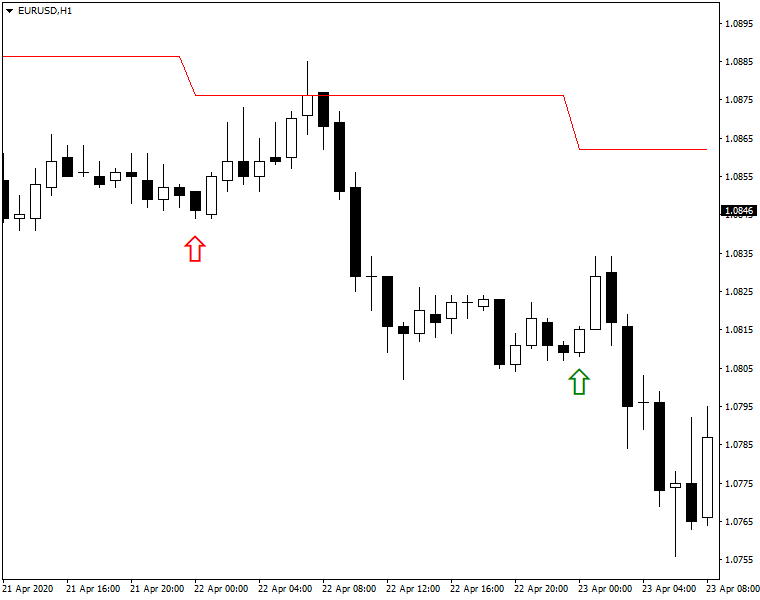
For example, on the historical chart below is the MTF MA of D1 attached to H1. Equally you tin can run across, the higher timeframe MA value becomes visible on the first candle of the day (marked with the red arrow). However, in alive trading, information technology wouldn't announced until the first candle of the next 24-hour interval (marked with the dark-green pointer):
When trading with multi-timeframe indicators, you lot must always remember to go along an eye for such a repainting and never guess the efficiency of such indicators by their appearance on historical charts.
How to know if the indicator is repainting?
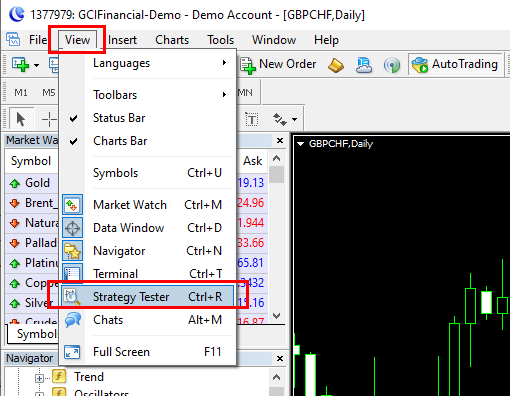
The easiest way to bank check and verify in MT4 or MT5 platforms is the Strategy Tester. You lot can launch a visual backtest of whatever indicator and see if its signals change post factum. Here is how to do it:
- Open the Strategy Tester by pressing Ctrl+R on your keyboard or via the card: View->Strategy Tester.
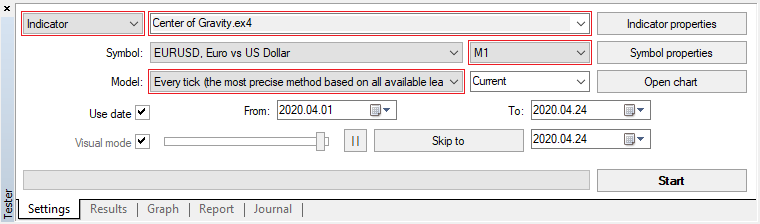
- Use the Settings tab to ready a backtest of the indicator you lot wish to check for repainting. Switch from Expert Advisor to Indicator. Visual mode volition turn on automatically. Select the indicator proper noun via the driblet-down listing. Prepare timeframe to M1 - unless the indicator doesn't work on that timeframe; in this case, fix the smallest possible timeframe. Switch Model to Every tick. Change other settings to your liking or if the indicator requires some specific configuration.
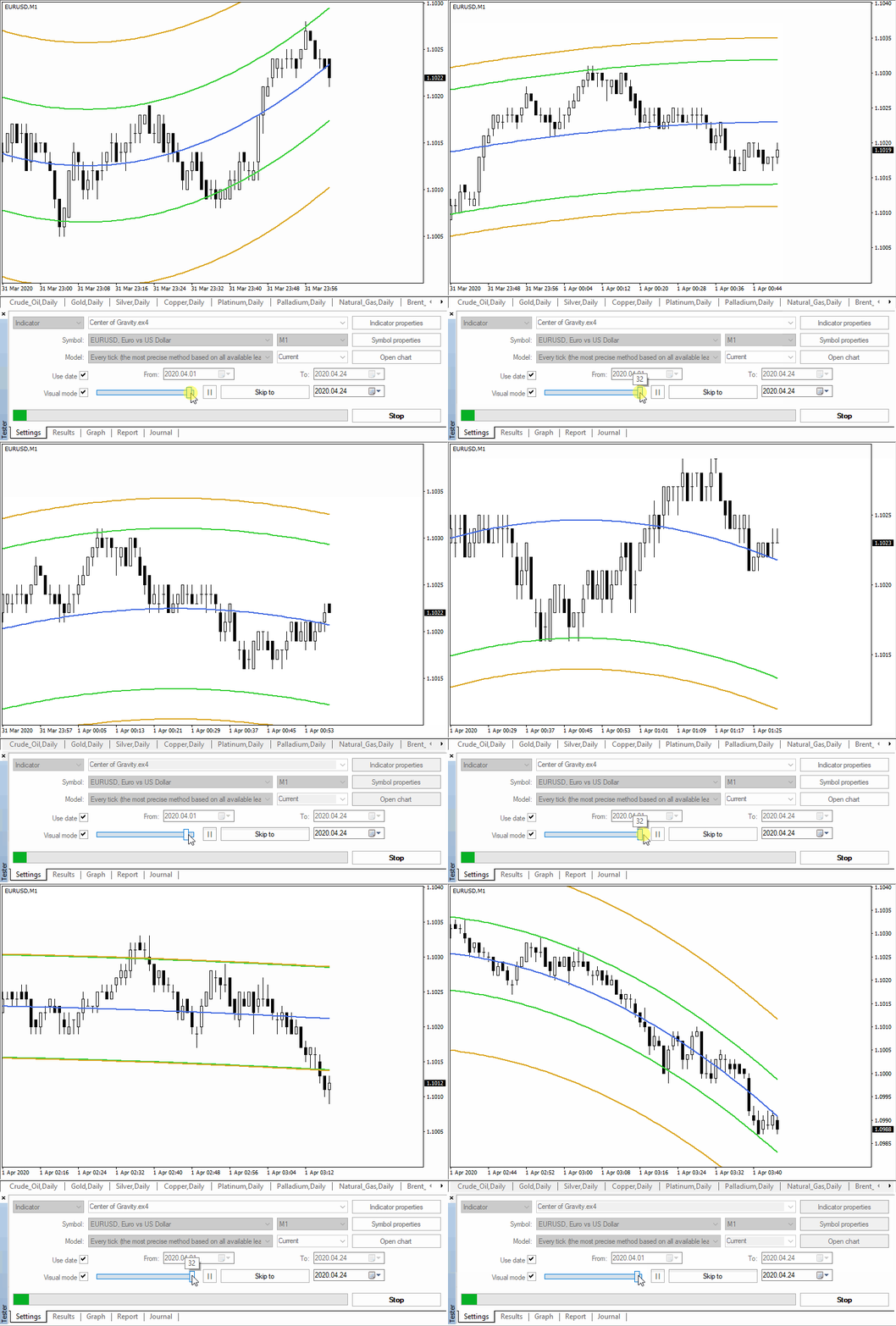
- Run the test, adjusting the speed to be able to find if signals change on the past candles when the new ones make it.
Y'all can also watch the entire procedure in item in this video:
As you can see, it isn't difficult to tell if the indicator is repainting or not.
One potential problem with some specially malicious indicator sellers could be that they observe whether indicator is being tested in Strategy Tester and skip repainting if so; this would conceal the repainting nature of that indicator, merely information technology would as well reveal how inferior its signals are (as the repainting is mostly done to make signals await more than accurate than they are).
How to tell if an indicator is repainting if I cannot backtest it?
If the developer doesn't want to provide a demo version for backtesting, ask directly whether the indicator is repainting or non-repainting. Developer might acknowledge its repainting nature because, mayhap, the indicator isn't supposed to be used for taking direct trading signals. If the developer insists that the indicator is non-repainting but all the provided historical chart screenshots show perfect entries and exists that are too skilful to be true, the chances are the indicator is a repainting 1.
Is an indicator that repaints useless?
Non all repainting indicators are bad. As you saw in a higher place, indicators that repaint the latest candle aren't bad at all and provide great information to technical analysts regardless of this trait. Indicators that repaint their values on the already completed candles can besides be quite useful. To not use them at all considering they repaint isn't ever a smart choice. Of course, you must know how they function and acknowledge the fact that they repaint.
Examples of good repainting indicators
ZigZag
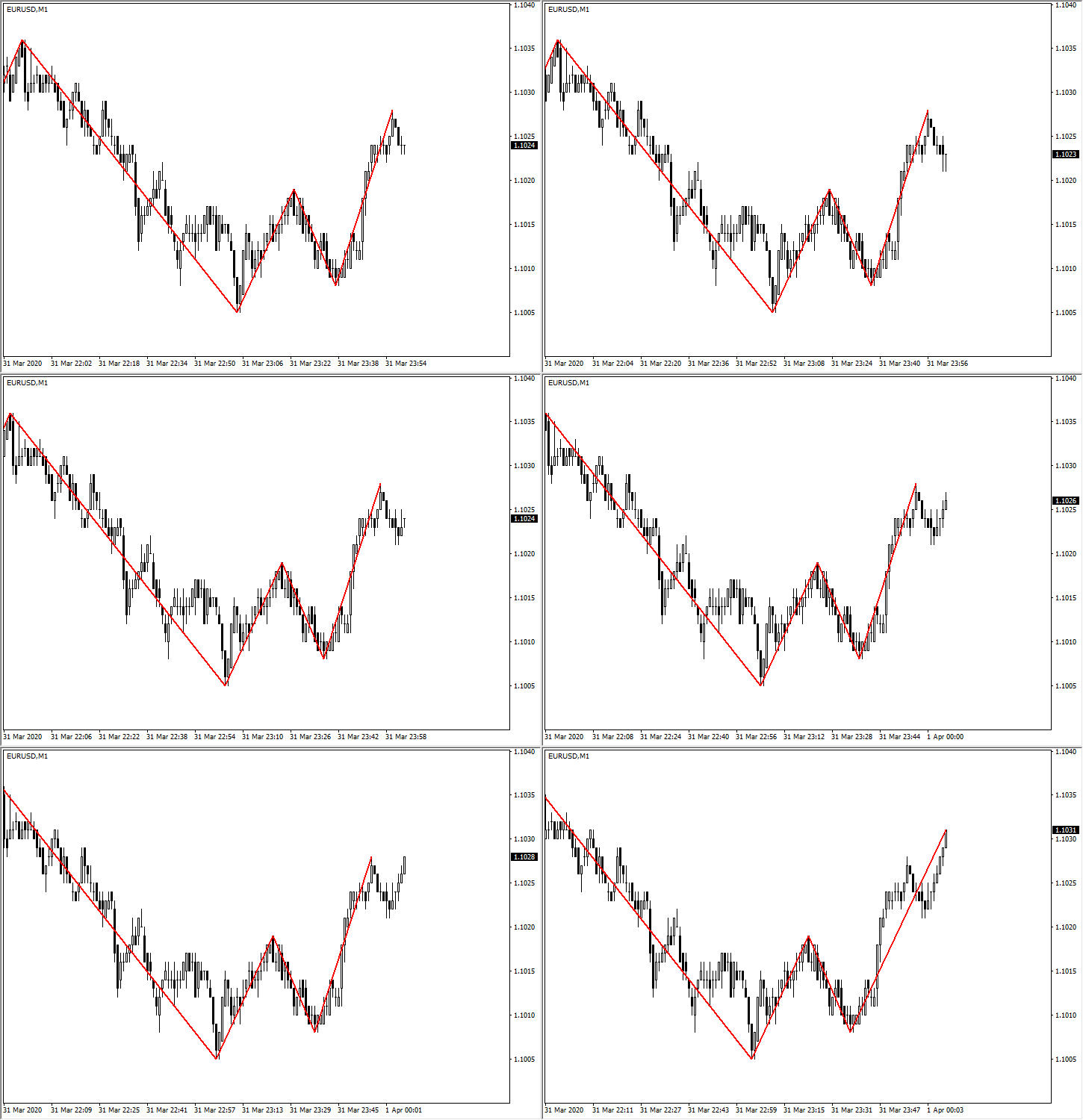
Ane of the nigh popular repainting indicators every trader encounters after installing a MetaTrader platform is ZigZag. Information technology is an awesome indicator but information technology repaints. To use it properly, traders accept to be aware that it repaints and utilize its lines and nodes solely for building support and resistance zones or trend lines.
Fractals
Fractals (or Bill Williams' Fractals) is some other fascinating repainting indicator that is present in MT4 and MT5 platforms by default. Fractals are drawn using simple rules: fractal up pointer requires a high surrounded by two lower highs from each side; fractal downwards pointer requires a low surrounded by two higher lows from each side. As you tin come across, it needs five candles in total to display an arrow, and two of the candles should exist in the future relative to the current 1. This results in the repainting beliefs. A trader should look for two side by side candles to finish forming before considering the output of the Fractals indicator.
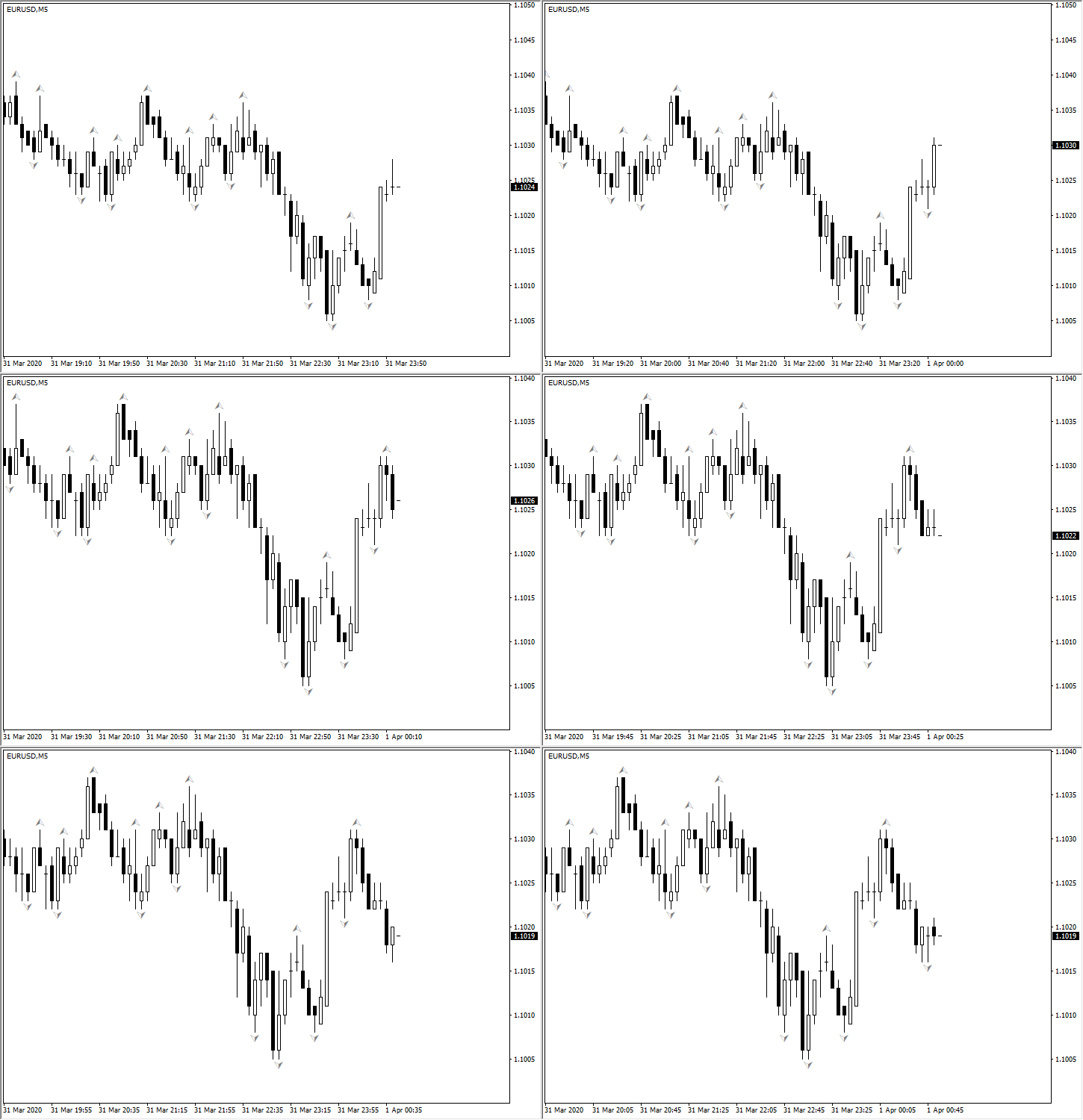
Indicators such every bit ZigZag and Fractals are not meant to deceive traders. They are effective in identification of back up and resistance levels.
Semafor
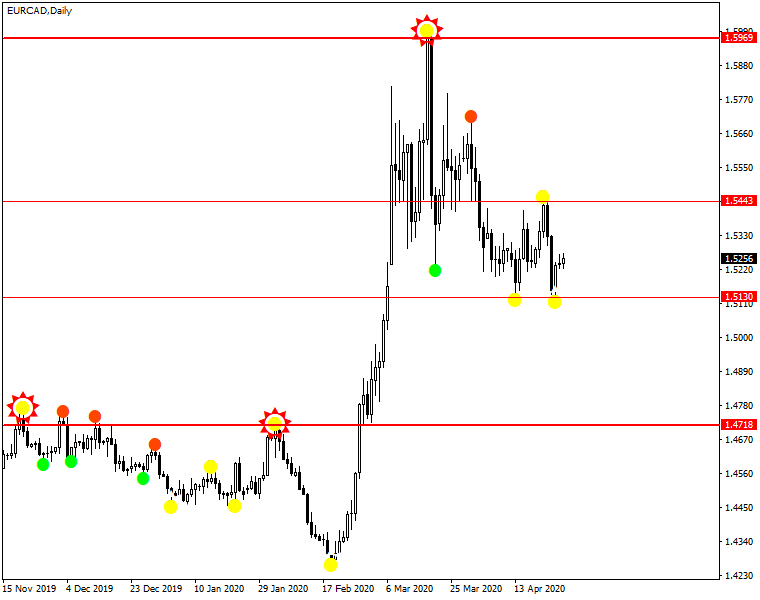
Semafor indicator had already been mentioned above when we were first talking virtually indicators repainting the signals of the previous candles. Still, Semafor indicator is a worthy custom indicator available for many trading platforms. Despite the fact that information technology looks besides good to exist true, lots of people rely on it for analysis of the past cost action and for marking down the of import price levels on the chart. Numerous threads on popular FX forums confirm that it has no lack of fans to this day. The below chart shows an example markup of short-term and long-term support and resistance levels using the Semafor indicator:
Heart of Gravity
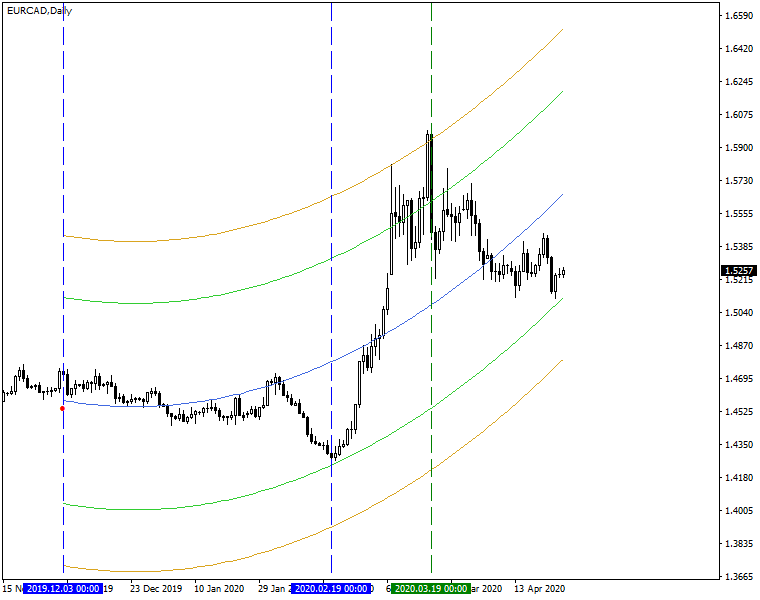
Center of Gravity is displayed above in the tutorial on detecting repainting with Strategy Tester. Information technology is a variant of linear regression channels and is extremely useful in two tasks - detecting trend management and measuring the volatility of the past N candles. Of form, information technology is crucial to e'er keep in mind the repainting nature of the indicator and not to use it for straight generation of entry and get out signals for your trades. The chart instance below shows a clear trend management (up), a period of low relative volatility (betwixt the 2 bluish lines), a catamenia of excess volatility (between the second blue line and the light-green line), and the current flow of "normal" volatility.
How to prepare indicator repainting?
If you lot are wondering if there is any way to edit an indicator and then it doesn't repaint, then you take some options available.
Fixing a repainting indicator entails reprogramming information technology via its MQL source code. There is no some single method that is applicable to all repainting indicators for making them non-repainting.
Indicators that rely on the Close/Loftier/Low of the electric current candles can be "fixed" past making them draw signals only later on the current candle closes.
Repainting indicators that have advantage of looking into the future candles tin be fixed by removing the code that does so. Unfortunately, the indicator might become completely unusable after that as information technology draws to many imitation signals, which previously had been hidden past the repainting process.
In both cases, you should either know some coding to try fixing the repainting or hire a professional MQL developer to fix it. If y'all don't have access to the source code of the indicator (.mq4 or .mq5 file) and only take compiled indicator (.ex4 or .ex5 file), it will be impossible to prepare the repainting.
Other platforms
MetaTrader is arguably the most popular trading platform in online retail Forex trading. However, in other platforms, repainting indicators can also pose a problem when an unsuspecting buyer can be scammed by fraud sellers. Fortunately, equally you accept seen above, not all repainting indicators are useless - the trick is to know whether the indicator repaints and to employ it accordingly.
cTrader
cTrader isn't gratuitous from repainting indicators. cAlgo indicators can endure from the same types of repainting as MQL indicators. Indicators based on Close price repaint the latest candle's value. Malicious, poorly coded, or special purpose indicators can repaint the values on by candles. The problem is that it isn't possible to run indicator backtests in cTrader, so, unlike in MetaTrader, at that place is no fast and easy way to check if an indicator repaints. The best way is to observe how the indicator functions on some very short timeframe or, if yous sympathize C# code, analyze the source code of the indicator (when information technology is available).
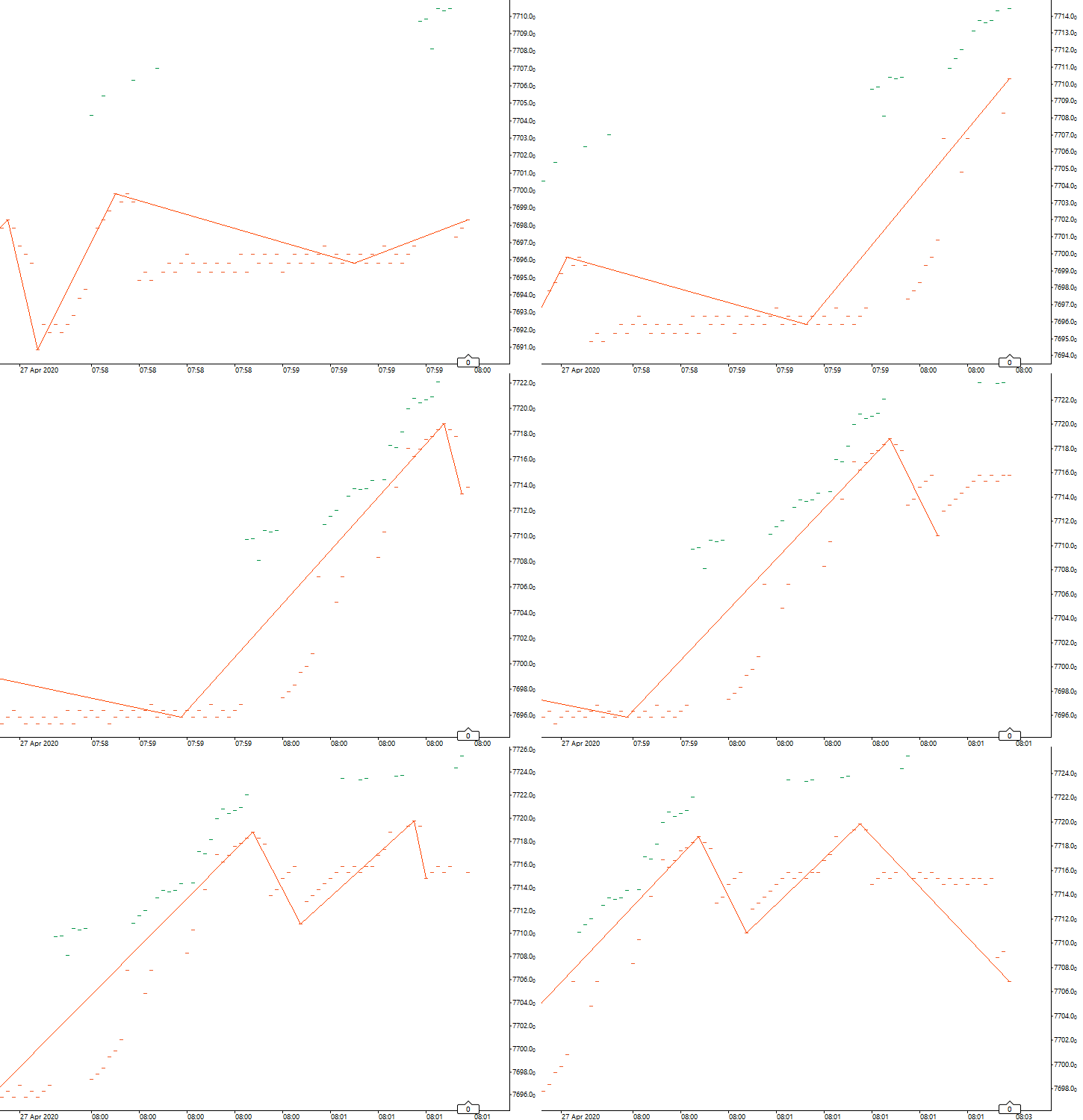
Hither is a time-lapse of ZigZag indicator repainting in cTrader on a tick chart:
NinjaTrader
NinjaTrader is not allowed to repainting indicators either. If y'all utilize this trading platform, you have to be aware of the repainting nature of the indicators you lot use. To check whether an indicator is a repainting or not-repainting one, you tin use Market Replay facility of NinjaTrader. It finer allows you lot to backtest any indicator on a chart of your option.
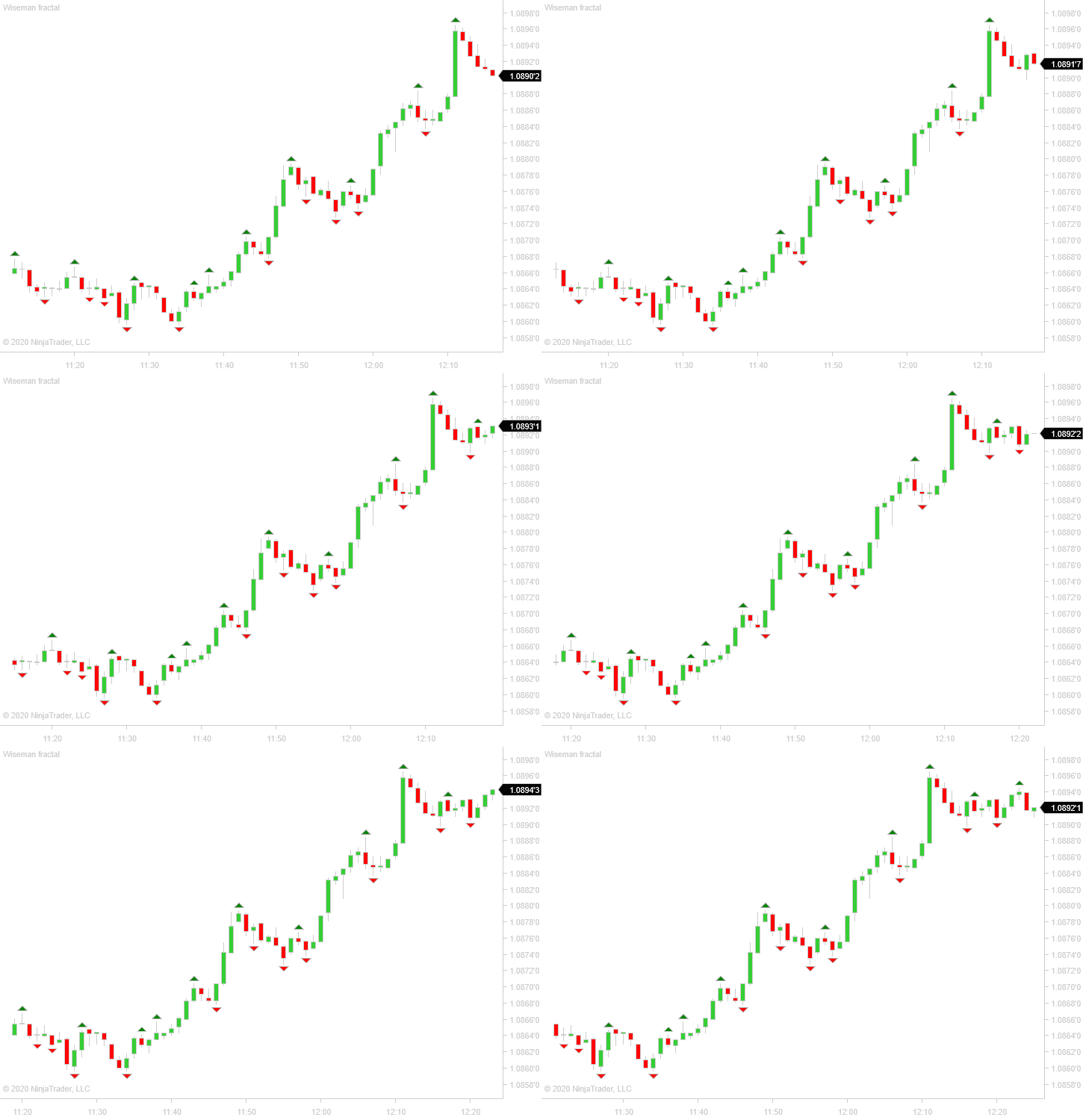
Here is a Market Replay demonstration of the Fractals indicator repainting in NinjaTrader - note that signals appear merely two candles in the future:
TradingView
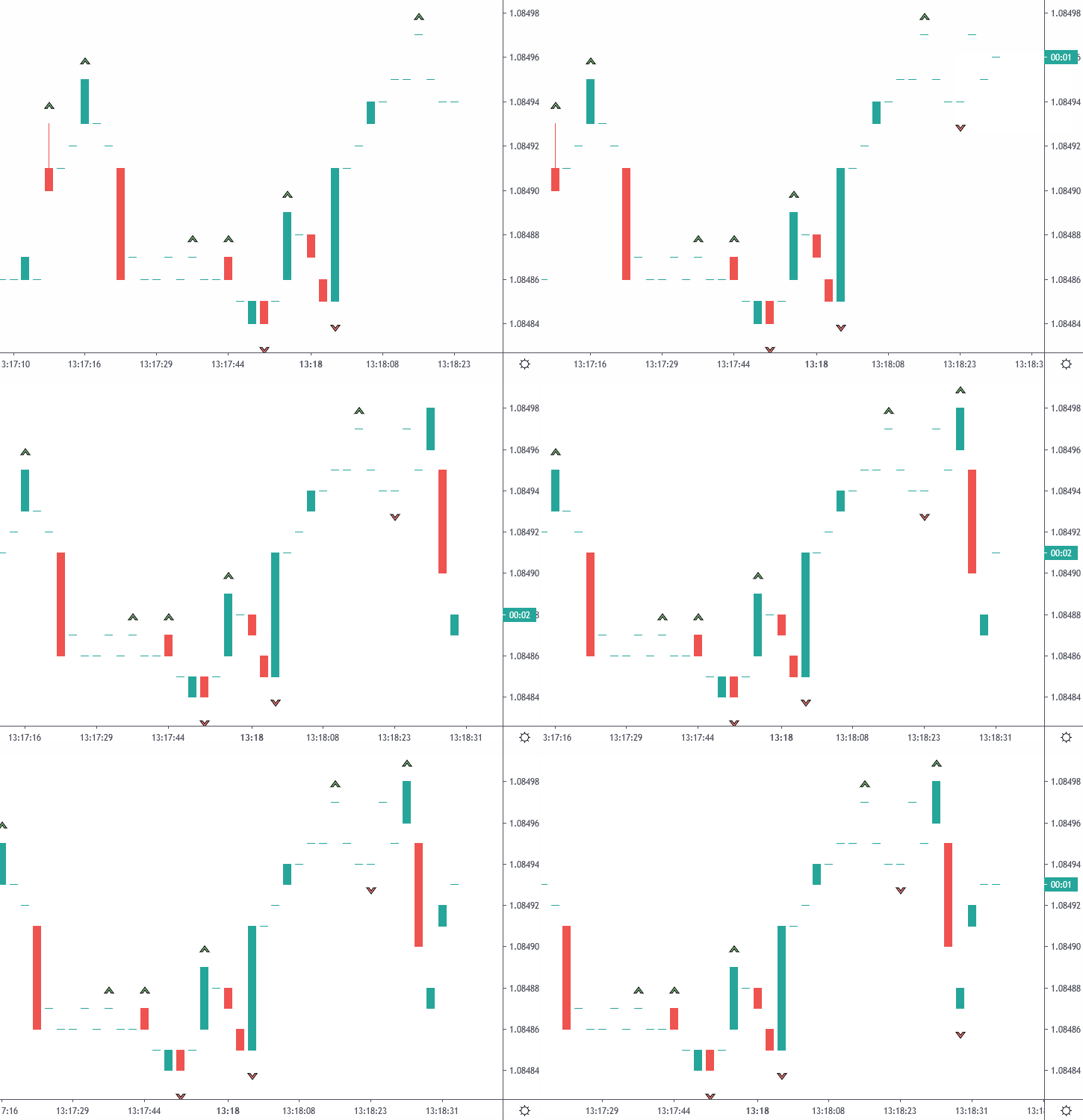
TradingView is a very popular charting platform among all kinds of fiscal traders (including crypto and Forex). The main repainting indicator trouble - when indicator values on sometime candles are updated with the data from hereafter candles use to TradingView the same as it does to other platforms. You can test to check if the indicator is repainting either by running information technology on a 1-second nautical chart equally done with Fractals in the animation below, or you lot can launch the Replay characteristic to run a fast-frontwards replay of any amount of bars from whatsoever timeframe and see how the indicator behaves.
The other of import type of repainting problem pertinent to TradingView becomes relevant when using information from upper timeframe candles. It is possible for a strategy script to run into the Open, High, Low, and Close data of the upper timeframe candle during processing of its "inner" candles of the lower timeframe. This causes backtests to "predict" the minimum and maximum prices for the future period (based on the upper timeframe), which tin exist enormously misleading compared to the actual alive tests of the strategy script.
This is mitigated past fixing the strategy script's source code and then it counts the candles on the lower timeframe and accesses the upper timeframe's candle data only when plenty candles on the lower timeframe are closed (e.g., lx 1-infinitesimal candles for an H1 upper timeframe or 24 ane-hour candles for a D1 upper timeframe, and and so on).
In study scripts (indicators), this is fixed using the lookahead parameter of security role by setting it either to barmerge.lookahead_on or to barmerge.lookahead_off to prevent "seeing" the unfinished upper timeframe candle'due south data.
Unfortunately, this cannot be helped if you are dealing with a airtight-source script. It could be a repainting one and yous wouldn't be able to verify or fix that via the source code.
Determination
When taking trading signals for entries and exits from an indicator, make sure it is a non-repainting one. Trading using signals from repainting indicators volition cause but loss and frustration. Always check if the indicator is repainting or non-repainting via Strategy Tester before buying one. Demand full disclosure from its developer. Don't get yourself lured by nice looking repainted charts with seemingly perfect historical signals that take hold of every low and high.
A good repainting indicator always makes information technology clear that it is indeed repainting. A bad repainting indicator disguises equally a not-repainting one, tricking the users and bringing losses to their accounts.
If you want to get news of the almost contempo updates to our guides or anything else related to Forex trading, you tin can subscribe to our monthly newsletter.
Forex trading bears intrinsic risks of loss. You lot must understand that Forex trading, while potentially profitable, tin make you lose your money. Never trade with the money that you cannot afford to lose! Trading with leverage can wipe your account even faster.
CFDs are leveraged products and every bit such loses may be more than the initial invested uppercase. Trading in CFDs carry a high level of gamble thus may not be appropriate for all investors.

Source: https://www.earnforex.com/guides/what-is-repainting-indicator-in-forex/
Posted by: hayesreflud1983.blogspot.com
0 Response to "Best Non Repainting Forex Indicator"
Post a Comment